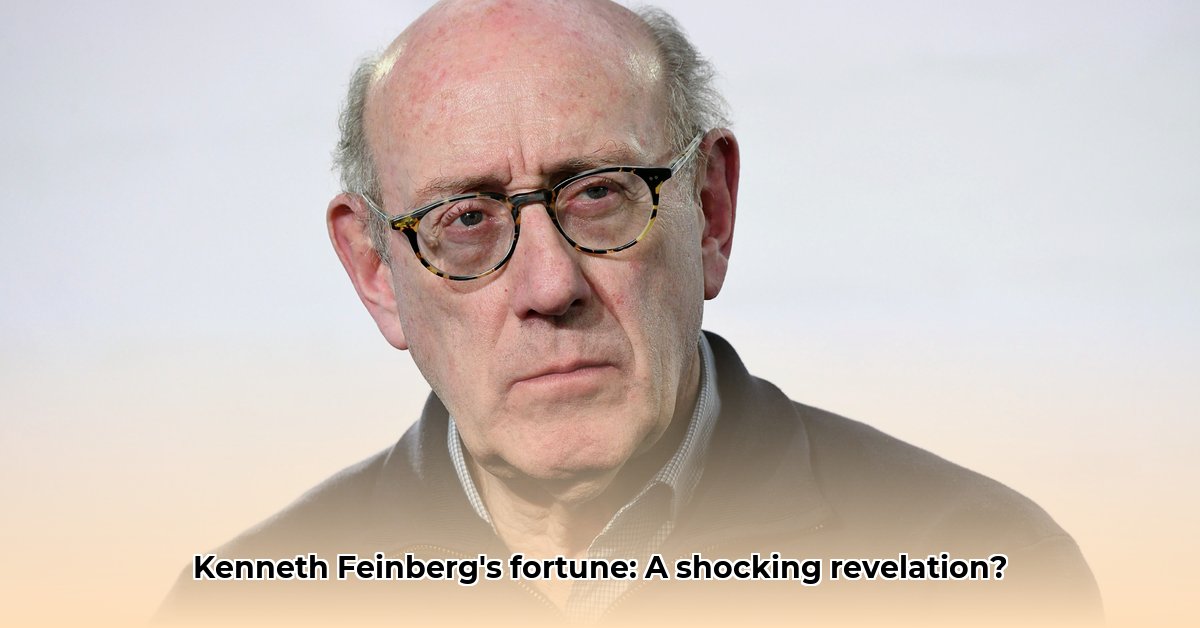
Kenneth Feinberg's name is inextricably linked to the agonizing task of assigning monetary value to human suffering. He’s the architect of compensation programs following tragedies like 9/11, the BP oil spill, and the Boston Marathon bombing. While his net worth is a natural question, it pales in comparison to the far more complex and compelling story of his career: the ethical and practical challenges of quantifying immeasurable loss. This isn't simply about dollars and cents; it's about the profound human cost of disaster and the often-impossible quest to make amends.
The Architect of Compensation: Feinberg's Methods
Feinberg's unique expertise lies in translating the devastating impacts of large-scale tragedies into structured compensation frameworks. His approach, however, sparked intense debate. Could a formula ever truly encapsulate the immeasurable loss, the shattered lives, the enduring trauma? Critics argued that reducing human suffering to a mathematical equation was inherently dehumanizing, failing to capture the unique grief experienced by each victim and their families. They questioned whether any system can adequately quantify the unquantifiable.
Consider the impossible task of pricing a parent's loss, a child's stolen future, or a community's shattered sense of safety. Yet, Feinberg consistently faced this impossible task, building systems designed to balance fairness with efficiency amidst unimaginable pain. His systematic approach, however imperfect, provided a framework for dealing with profound loss; it offered structure and a pathway through grief where previously there was chaos.
Navigating Ethical Dilemmas: Criticisms and Achievements
Feinberg's career is a complex narrative of both praise and criticism. The central question remains: can any formula deliver true fairness when dealing with the profoundly personal and unique nature of loss? Some experts champion his systematic approach as the most practical solution in mass casualty situations, while others argue for a more individualized approach, even if less efficient. Each case presented unique ethical dilemmas, forcing Feinberg to make agonizing decisions under intense scrutiny.
"The pressure was immense, the stakes impossibly high," reflects one observer familiar with Feinberg's work. He balanced the need for a consistent system against individual stories of loss, constantly walking a tightrope between systemic efficiency and individual justice. The debate continues, highlighting the inherent difficulty of reconciling these seemingly irreconcilable goals. Academics and legal scholars still grapple with the ethical questions raised by his work, exploring alternative models and more nuanced approaches to victim compensation.
A Lasting Legacy: Shaping the Future of Compensation
Feinberg's influence extends far beyond individual cases. His work has profoundly reshaped the landscape of mass victim compensation, providing a model for future crises. He pushed boundaries, forcing society to confront uncomfortable questions about fairness, justice, and the immeasurable value of human life. His professional success is undeniable, reflecting the profound impact of his decades-long work in resolving some of history's most sensitive disputes. His methods, though controversial, have demonstrably influenced legal frameworks and public policy, shaping the conversation around the valuation of loss in catastrophic events.
However, his financial achievements are insignificant compared to his impact on countless lives. The true measure of his legacy lies not in his net worth but in the lives he has helped rebuild and the tough questions he forced us to consider. His work has fueled ongoing discussions, research, and the development of new approaches, driving progress towards more ethical and effective solutions.
The Value of Ethical Considerations: A Deeper Dive
Kenneth Feinberg's journey serves as a powerful case study in the ongoing evolution of disaster victim compensation. Future systems must better balance standardized processes with individualized attention. There's a growing consensus that greater transparency and stronger ethical guidelines are essential for fairness and trust. Researchers are exploring models that incorporate qualitative factors—elements beyond financial losses, such as psychological impact, disruption of support networks, and long-term consequences of trauma—into compensation equations. This ongoing effort strives for a more just and compassionate approach to supporting victims in their recovery.
The evolving understanding of trauma informs this ongoing discussion. As our knowledge expands, so will our capacity to create compensation systems that properly address the multifaceted needs of those who have suffered profound loss. The pursuit of a fairer, more humane system is an ongoing and necessary challenge.
Conclusion: A Complex and Enduring Legacy
Kenneth Feinberg's career transcends a simple narrative of wealth accumulation. It's a complex tale of immense challenges, ethical dilemmas, and the relentless struggle to address immeasurable human suffering. He leaves behind a legacy of both significant achievements and persistent debate. His work inspires ongoing research and discussion, highlighting the ongoing pursuit of a more just and compassionate approach to compensating victims of large-scale tragedies. The true measure of his legacy lies not solely in numbers, but in the enduring human cost of tragedy and humanity's persistent attempt to heal and rebuild in its aftermath. His net worth, while a matter of public curiosity, is ultimately a secondary consideration to the profound and lasting impact of his work.